Powering Britain’s Gas Network: Inside Cadent’s Fleet Strategy
Supporting Safety, Efficiency and Innovation
Introduction
Cadent is the UK’s largest gas distribution network, responsible for maintaining and operating the infrastructure that delivers gas safely and reliably to more than 11 million homes and businesses.
Its network spans the North West of England, West Midlands, East Midlands, East of England and North London, with operations focused across three key areas: network infrastructure, emergency response and customer repairs.
Supporting these essential services is a large and diverse fleet of more than 3,000 vehicles, aligned operationally with these core business functions.
Matt Fitton, Fleet & Logistics Manager for Cadent’s North West network, is responsible for more than 750 of those vehicle assets and their drivers. Essential Fleet Manager Magazine spoke to Matt about his demanding role, which focuses on operational efficiency to ensure the delivery of vital services, safety and compliance, and an ongoing commitment to driving improvements through innovation and stakeholder engagement.
Q: Could you tell us about what a typical day for you involves? What are the everyday challenges?
As a Fleet and Logistics Manager at Cadent, no two days are the same. I regularly liaise with key stakeholders across the business to understand and resolve a wide range of operational issues, from Area Managers handling VORs to engineers reporting vehicle faults, and our Local Delivery Partners (LDPs) supporting day-to-day logistics.
I also work closely with our planning team to ensure compliance activities and the Key 4 Key programme are effectively scheduled within engineers’ workloads. Alongside this, I engage with our supply network to strengthen partnerships and continually improve our operations, with a constant focus on maximising vehicle availability and minimising downtime across the fleet.
Q: What is the current make-up of your vehicle fleet and broadly, what services do they support?
In the North West, we operate a fleet of 768 LCVs and 12 HGVs, comprising three Vacuum Excavators, three Whale Tankers, four 7.5-tonne box bodies and two MEG trucks.
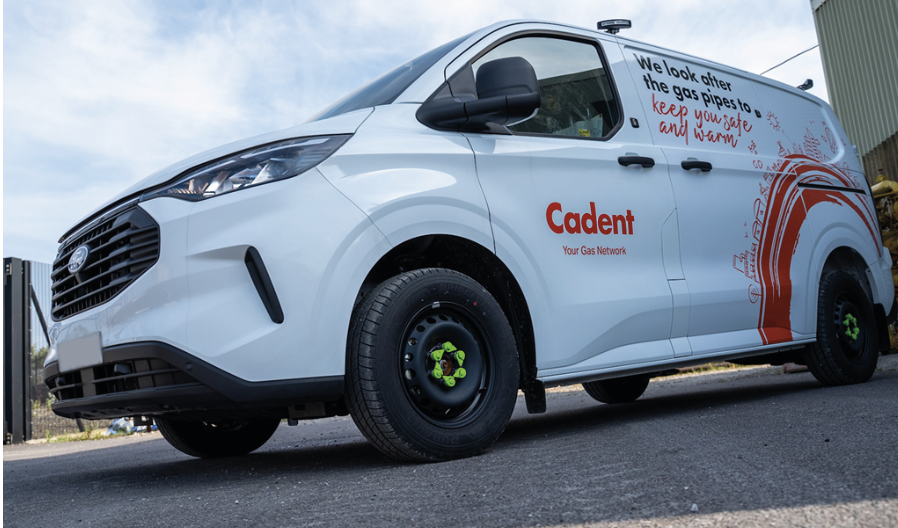
Around 10% of the North West fleet is now electric, including a mixture of Vauxhall Vivaro Es and Maxus ED7 and ED9 models. The majority of these vehicles are operated by our First Call Operatives (FCOs), the engineers who attend site within an hour of a gas leak being reported in order to trace the leak.
We also run around 280 PTO vehicles, made up of Mercedes-Benz Sprinters, Ivecos and Ford Transits. These traditional PTO systems provide engineers with compressed air and power and are primarily used by our Repair teams, who, once a leak has been detected, begin the repair process on the gas infrastructure.
The remainder of the North West fleet includes barrier vans, flatbeds, pick-up trucks and car-derived vehicles used across a range of operational functions, including Energy Operations, Customer Care, Land Liaison and other support services.
Q: With many of your vehicles having undergone complex fit-outs and operating in often challenging environments, which present the greatest SMR challenge?
At Cadent, we operate as efficiently as possible as a regulated business and, as a result, we do not carry spare vehicles within the fleet. One of our biggest challenges is therefore ensuring the supply chain fully understands the need to return vehicles to the road in a timely manner.
As mentioned, many of our vehicles feature specialist fit-outs and components, so identifying the correct manufacturer or repairer for each element is critical in helping to expedite the process. This often means repairs can be directed straight to the appropriate garage or manufacturer, reducing unnecessary delays and downtime.
Another significant challenge at the moment is dealership booking availability. We are finding that many manufacturers are operating with lead times of three to four weeks before a booking date can even be provided, which can result in unwarranted vehicle downtime and operational disruption.
Q: You have already successfully transitioned a significant part of your fleet to Electric Vehicles (EVs) and although you are ahead of set objectives, which vehicles remain a challenge and why?
I don’t think it is necessarily a question of which vehicles present the challenge. It is more about transitioning our operation and the way we work to give EVs the best possible opportunity to thrive within the business.
We are regulated to attend a gas escape within one hour of the leak being reported. While many of our engineers have home charging installed, challenges arise where this is not available. In these instances, engineers rely on the public charging infrastructure, which means additional time must be built into daily schedules to accommodate charging requirements.
EV technology has also developed significantly since our initial deployment of Vauxhall Vivaros. As we are now seeing with the Maxus ED7 and ED9 models, increased range and improved capability are helping us to overcome many of the operational challenges we previously experienced.
Q: When replacing vehicles, what is your process for engaging with operatives, other departments and suppliers to ensure you achieve the best possible solutions?
At Cadent, we create a dedicated working group whenever we redesign a vehicle conversion. The process begins by identifying the most suitable vehicle make and model, followed by monthly meetings to review current conversion designs, discuss operational issues and identify potential improvements.
These working groups are typically made up of one or two Fleet & Logistics Managers, engineers representing each of our five operational areas, and central functions such as the commercial team. Together, the group oversees the design and build process through to completion.
Having all key stakeholders involved throughout the decision-making process helps ensure the final solution meets operational requirements and makes final approvals more straightforward and efficient for our supply chain partners.
Q: Are there any challenges or conflicts in balancing operational requirements with targets and budgets set by OFGEM?
We always strive to operate as efficiently as possible as a business. Our budgets are set over five-year regulatory periods under OFGEM’s RIIO framework.
Having recently completed RIIO-2, we are now operating within RIIO-3, which runs from April 2026 through to April 2031. This provides us with agreed budgets for the full five-year period, allowing us to plan vehicle replacements, fleet investment and operational improvements well in advance.
Operationally, the biggest challenge remains ensuring our First Call Operatives (FCOs) can attend a reported gas leak within one hour, particularly as we continue to introduce EVs into the fleet. However, we are now well advanced on our electrification journey and are gathering valuable operational data and feedback that is helping us continually improve and refine our EV deployment across the network.
Q: A large part of safety, efficiency and risk reduction is derived from how you manage drivers. What is your approach and what technology are you utilising to assist?
Ultimately, we want all colleagues to go home in the same condition they arrived in at the start of their shift. At Cadent, the safety and well-being of our engineers and wider workforce are taken extremely seriously, and our approach to driver management reflects that priority.
To support this, we work with our supply chain partner, TTC, to manage training schedules and licence compliance. TTC conducts initial driver risk assessments for all drivers, including company car users, to identify individual risk profiles and ensure appropriate, tailored training is assigned.
In addition, supervisors and managers can proactively book further development courses through the system, including advanced driving and towing training where required.
Alongside this, we have established a dedicated Safe Driving Group covering all five networks. The group, made up of managers and supervisors, meets monthly to review the previous month’s incident data and discuss specific safe driving themes. This ensures lessons are shared consistently across the organisation and continuously fed back into our approach to improving safety and reducing risk across the fleet.
Q: Could you expand on any challenges when implementing driver monitoring technology?
As with most new technologies, the introduction of driver monitoring systems can naturally raise questions and concerns among employees. In a large fleet operation, it can be easy for new technologies and policies to be perceived as imposed without sufficient engagement or consultation.
At Cadent, we place significant importance on communication and collaboration throughout the implementation process. We regularly engage with our Trade Unions to better understand the concerns, expectations and requirements of their members, ensuring that feedback is considered as part of any rollout.
This collaborative approach helps build trust and understanding around new technologies while ensuring that any solutions introduced support both operational safety and colleague well-being.
Q: Cadent has a reputation for adopting innovations that improve operational efficiency, sustainability and safety. Could you mention some key examples and are there any solutions not yet available that you are keen to see come to the market?
As a business, we are open to adopting new technologies and supporting their development, working closely with our supply chain and internal teams to design solutions that meet our operational needs.
One example we are particularly proud of is our collaboration with Picarro. Together, we have developed and installed Advanced Leak Detection (ALD) systems on Skoda Enyaq vehicles. These are deployed across Cadent’s network, enabling engineers to drive routes while specialist equipment detects methane in the atmosphere.
When methane is detected, the system generates an in-vehicle alert on a tablet, pinpointing the exact location. The driver can then record the information, with coordinates automatically sent back to Cadent. This allows us to take a more proactive approach to network management, identifying and investigating potential leaks before they are reported, rather than solely reacting to calls after a leak has already been detected.
We are also actively exploring the future of the PTO (Power Take-Off) vehicle. With traditional ICE vehicles expected to be phased out in line with government policy by 2030, there remains a clear operational requirement for compressed air and onboard power within an EV environment.
We are currently involved in a number of trials in this space, and I believe this is a key area for future innovation. Greater collaboration across the market will be essential to develop scalable solutions that allow us to fully replicate current functionality in an electric fleet environment without compromising operational capability.
Q: What do you see as the challenges of the next 2 years and what improvements will you be seeking?
I think the fleet sector is likely to face emerging challenges over the next two years, particularly as the transition to electric vehicles continues. As demand rises, bottlenecks could form in the supply chain, and manufacturers and local garages will need to upskill mechanics to work on EVs, which could, in turn, affect repair turnaround times.
Alongside this, the availability of key components and materials, including the long-term supply of lithium, may also put pressure on lead times and fleet resilience.
Cost will also remain a significant factor. Many fleets will need to carefully balance capital investment decisions against ongoing OPEX spend, particularly given the higher upfront cost of EVs compared with traditional ICE vehicles, even where whole-life savings may be achievable.
In addition, the balance between vehicle weight and payload capacity is likely to become an increasing operational challenge, particularly for fleets carrying specialist equipment. This will need to be carefully managed to ensure vehicles remain compliant while still meeting operational requirements and supporting wider decarbonisation targets set by the government.
The above Fleet in Focus was featured in Essential Fleet Manager Magazine Issue 4(2026)