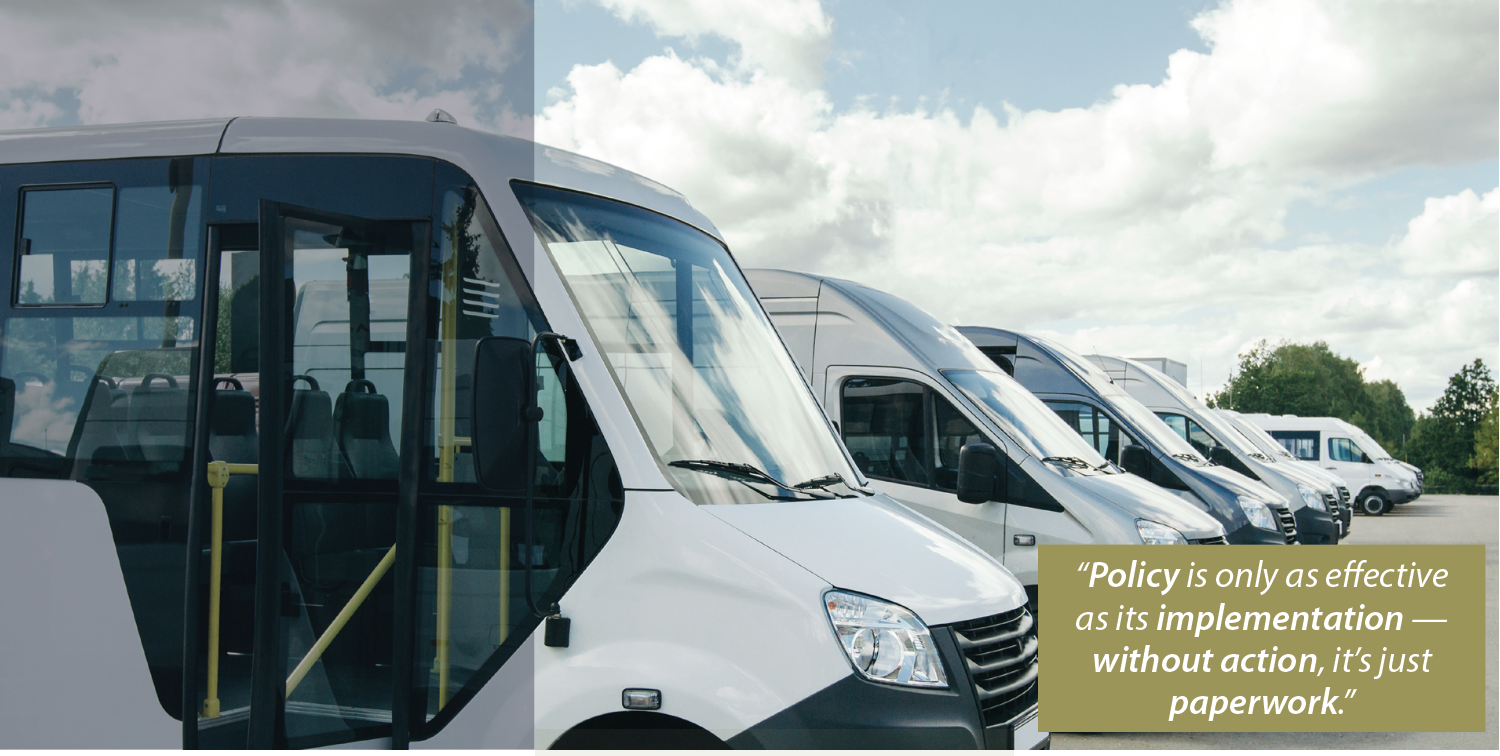
A fleet driver risk policy is not a “nice to have.” For any organisation operating vehicles, whether company-owned, leased, or part of the grey fleet, it is an essential foundation for safe, compliant, and cost-effective operations.
A well-designed policy goes beyond ticking compliance boxes. It provides a structured, defensible approach to identifying, assessing, and mitigating risks across all driving activities. When implemented effectively, it protects drivers, reduces operational costs, and safeguards the organisation’s reputation. Conversely, a poorly executed, incomplete, or absent policy leaves organisations exposed to operational, legal, and reputational risks.
Start with Driver Management
Effective fleet risk management begins with the driver. Behaviour behind the wheel remains one of the largest controllable risk factors in any fleet.
Eligibility and recruitment are the first lines of defence. Clear criteria should be established at recruitment and regularly reassessed. Driving licence checks must verify entitlement, endorsements, and any disqualifications to ensure that only competent, eligible drivers operate vehicles on behalf of the organisation.
Training is equally critical. Policies should mandate induction training for all new drivers, complemented by regular refresher sessions covering defensive driving, hazard perception, and risk awareness. Where incidents occur, or telematics data highlights higher-risk behaviour, drivers should receive targeted coaching and support to address specific issues.
Fitness to drive must also be included in the policy. This encompasses eyesight standards, fatigue management, and strict rules around drugs and alcohol. Policies should define working hours, required rest breaks, and procedures for reporting concerns. Providing a driver handbook ensures that expectations and safe practices are clearly communicated. The policy should be easily accessible, so drivers can refer to it at any time.
Prioritising Vehicle Safety
Vehicles are a key part of the risk equation. A policy should mandate daily walk-around checks or Driver Vehicle Inspection Reports (DVIRs), covering tyres, lights, mirrors, wipers, and other safety-critical components. Documenting these checks ensures accountability and auditability.
Planned maintenance should follow manufacturer recommendations and operational needs. Combining regular servicing with prompt defect reporting reduces mechanical failure risk and enhances safety.
Vehicle selection policies are equally important. Minimum safety standards should include ABS and advanced driver assistance systems (ADAS). Grey fleet vehicles, those personally owned but used for work, must meet similar standards. Organisations should verify roadworthiness, insurance coverage for business use, and ongoing maintenance, as oversight in this area is often weakest.
Establishing Clear Operational Rules
Daily operations demand clear rules and expectations. Mobile phone use should be strictly controlled, including handheld restrictions, with careful guidance on hands-free systems to minimise distraction.
Route planning and scheduling should be realistic, preventing drivers from feeling pressured to speed or take unsafe risks. Policies should provide guidance on personal use of company vehicles and enforce speed management through telematics where appropriate. This ensures driving behaviour is monitored objectively and supports both compliance and safety culture.
Managing Incidents Effectively
Even the best policies cannot prevent all incidents. Drivers must have step-by-step guidance on responding to incidents, including who to contact, what information to collect, and reporting timelines.
Organisations should investigate all incidents, including near misses, focusing on root causes rather than assigning blame. Efficient claims management, supported by accurate data collection, reduces downtime and helps control costs, while also identifying patterns.
Using Technology Responsibly
Telematics, dash cams, and AI-based monitoring systems offer invaluable insights into driver behaviour. Policies must define acceptable use, emphasising transparency and proportionality.
Compliance with GDPR and other data protection regulations is essential. Drivers should be informed and give consent where necessary. Using technology responsibly allows fleet managers to coach drivers effectively, reward safe behaviour, and intervene where risks are increasing, without compromising privacy.
Embedding Governance and Accountability
A fleet risk policy is only effective when backed by strong governance. Responsibilities should be clearly defined, from senior leadership through to line managers and drivers.
Regular reviews, audits, and updates—particularly following major incidents or regulatory changes- ensure the policy remains current. Clear disciplinary procedures must be in place so that non-compliance is addressed consistently, reinforcing the importance of safety and accountability.
From Policy to Practice
A fleet driver risk policy is only effective when it is actively implemented and embedded in daily operations. It should be a living document, reinforced through:
- Training: Ensuring drivers understand expectations and best practices.
- Communication: Sharing updates, insights, and lessons learned from incidents.
- Leadership: Demonstrating that management prioritises safety, not just compliance.
Building a Safety-First Culture
Beyond compliance, a fleet risk policy is a tool for shaping organisational culture. It sends a message to drivers that safety, responsibility, and accountability matter. Over time, embedding risk-aware behaviours leads to:
- Reduced incidents and collisions
- Lower insurance and repair costs
- Improved driver retention and morale
- Enhanced reputation and compliance with regulators
By treating risk management as a cultural priority, not just a procedural obligation, operators achieve tangible operational and financial benefits.
Conclusion
A comprehensive fleet driver risk policy is a cornerstone of safe, cost-efficient, and sustainable operations. From recruitment and training to vehicle safety, incident management, and technology use, every element contributes to reducing risk and protecting both drivers and the organisation.
For fleet operators, the message is clear: policy is only as effective as its implementation. When actively applied, regularly updated, and backed by leadership, a risk policy becomes more than compliance; it becomes a living framework for a safer, more efficient, and sustainable fleet.
Organisations that approach policy this way cultivate a culture of safety where drivers understand, expect, and actively participate in risk management. Duty of care is under increasing scrutiny. Making the policy visible, clear, and actionable is no longer optional; it is essential.
The above article featured in Essential Fleet Manager Issue 3(2026). Click the link below to view the magazine. Or you can download the article here.