
As a specialist designer and manufacturer of aluminium tanks for diesel, petrol, and other fluids, ACGB has observed first-hand how outdated fuel-handling practices continue to expose businesses to unnecessary risk. Charles Macé, Key Account Manager at ACGB, highlights these limitations and explains how purpose-built aluminium tank systems, designed for integration into light commercial vehicles, provide a safer, cleaner, and more efficient alternative.
The Operational Reality
Across sectors such as construction, utilities, highways maintenance, agriculture, and plant hire, fuel is still frequently transported in jerrycans, rotationally moulded (plastic) tanks, or steel tanks often mounted on trailers.
While these traditional solutions have been in use for decades, they struggle to meet the demands of modern fleet operations. Risks include spillage, contamination, theft, and safety hazards, all of which can compromise regulatory compliance, increase operational costs, and put drivers at risk.
“As fleet operators, you face the constant challenge of balancing uptime, regulatory compliance and total cost of ownership. From our experience, traditional fuel-handling methods such as jerrycans, rotationally moulded plastic units and steel tanks carry significant operational risks, including spillage, contamination, theft and safety hazards. These limitations clearly demonstrate the need for a more engineered, reliable approach to fuel containment and transfer.”
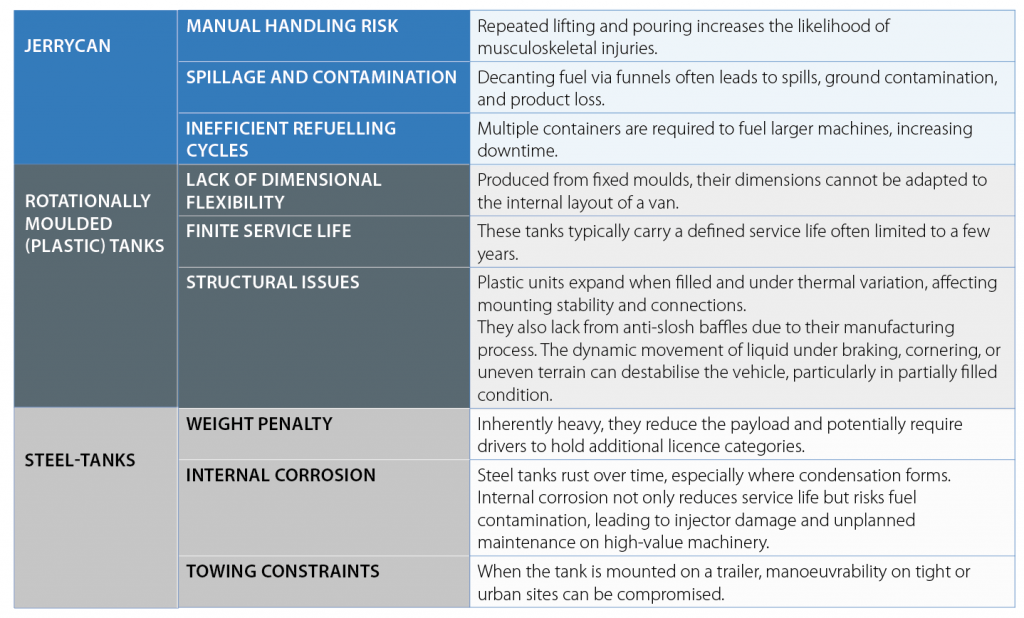
The table below outlines the methods commonly used by fleet operators, along with the key risks and operational challenges associated with each.
Aluminium: The Smarter Alternative
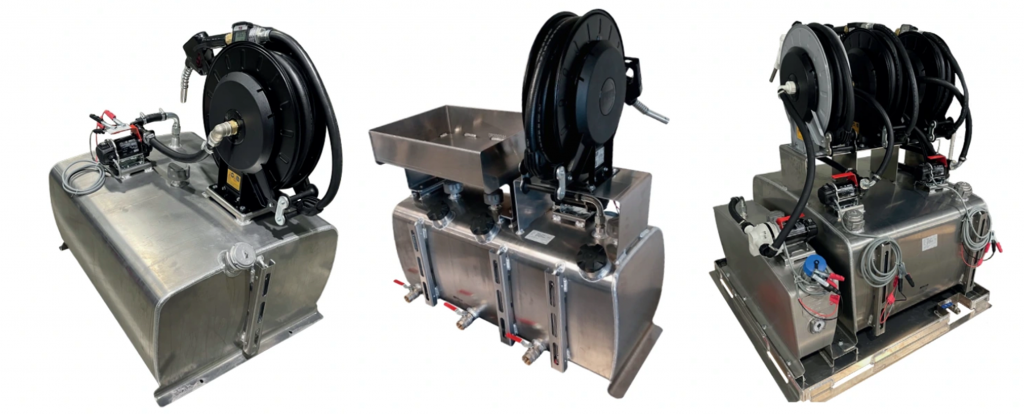
Tanks made from aluminium provide decisive technical advantages like:
Corrosion resistance: Aluminium does not rust internally or externally, protecting fuel quality and extending service life. They can also be trailer-mounted since they can resist UV and temperature variations.
Reduced weight: Lower mass improves payload capacity and vehicle efficiency. This also allows their integration within a van body, since they’re only half the weight of a steel version.
Structural integrity: Properly fabricated and baffled, aluminium tanks offer excellent durability under dynamic load conditions.
Long-term cost efficiency: Lower maintenance and longer lifespan offset initial capital expenditure.
“Whatever your priorities, aluminium is the smart choice every time. It delivers all the benefits of a metallic tank without the usual drawbacks, such as excessive weight or corrosion. For those focused on total cost of ownership, its typical 15–20 year lifespan translates into tangible, long-term value for your fleet.”
ADR-Compliant Standard Ranges
ACGB offers a full range of UN and ADR-approved transport tanks for road use in the UK, from 90 litres up to 900 litres for diesel, and up to 330 litres for petrol. Each tank is engineered to meet all relevant ADR requirements for the transport of dangerous goods, giving operators complete peace of mind whether they are working on public roads or private sites.
Bespoke Van-Integrated Solutions
In addition to standard models, ACGB designs bespoke tanks tailored to the internal layout of the customer’s van. While the majority of demand remains for fuel transport, these custom tanks can also store other fluids such as water, oil, tar remover, or coolant. For AdBlue, stainless-steel tanks are used to ensure full material compatibility, providing a safe and reliable solution for every application.
“Our bespoke design process takes the vehicle’s racking systems into account, adapting tank dimensions to fit seamlessly within the available space. This approach ensures the tank becomes an integral part of the vehicle’s architecture, rather than an afterthought.”
These tailored tanks can be delivered equipped with a complete suite of accessories, including transfer pumps, hose reels, volumetric flow meters, automatic shut-off nozzles and more. Depending on the fluid and available source of energy in the van, ACGB suggests the right alternatives to choose from.
Another feature of our tanks is the remote filling configuration. The filler cap can be made accessible from outside the vehicle body, eliminating the need to open rear doors or climb into the load area during refuelling. For fleet managers operating under strict environmental policies, remote filling systems support best practice in safe containment and handling.
“This external filling port is a key enhancement, helping to keep both the vehicle interior and exterior free from spills, while also making refuelling at the pump faster and more efficient.”
Beyond Fuel: Lube Skids for On-Site Servicing
Fuel transport is only part of the fluid management challenge. Modern fleets also require efficient, on-site solutions for oil servicing. To address this, ACGB designs and manufactures fully equipped, compartmentalised aluminium tanks capable of transporting both new and waste oils within a single integrated unit, allowing oil changes to be performed directly on site.
“Our lube skids feature a compartmented tank for fresh oil, another dedicated to waste oil recovery, and all the pumps and accessories needed to extract used oil and dispense new oil back into the machine.”
ACGB’s lube skids are built with mounting frames for van, trailer, or service body integration, ensuring loads remain stable and secure during transport. Optional lift pockets provide additional mobility, allowing the skid to be easily transferred between vehicles in the event of a breakdown.
“Just like fuel transportation to a job site, we wanted to offer a cleaner and safer alternative to hauling loose oil drums in the back of a van. Dealers representing brands such as JCB and John Deere have widely adopted our lube skids because of their positive impact on operator safety and operational productivity, improving efficiency by around 20% on average, while also supporting brand reputation.”
Full customisation is another major advantage of ACGB’s lube skids. Skid volumes and the number of fresh oil compartments can be tailored to each customer’s daily consumption, ensuring vehicles carry only the required amounts. This prevents vehicle overload and eliminates unnecessary trips to replenish oil during the workday, keeping operations efficient and uninterrupted.
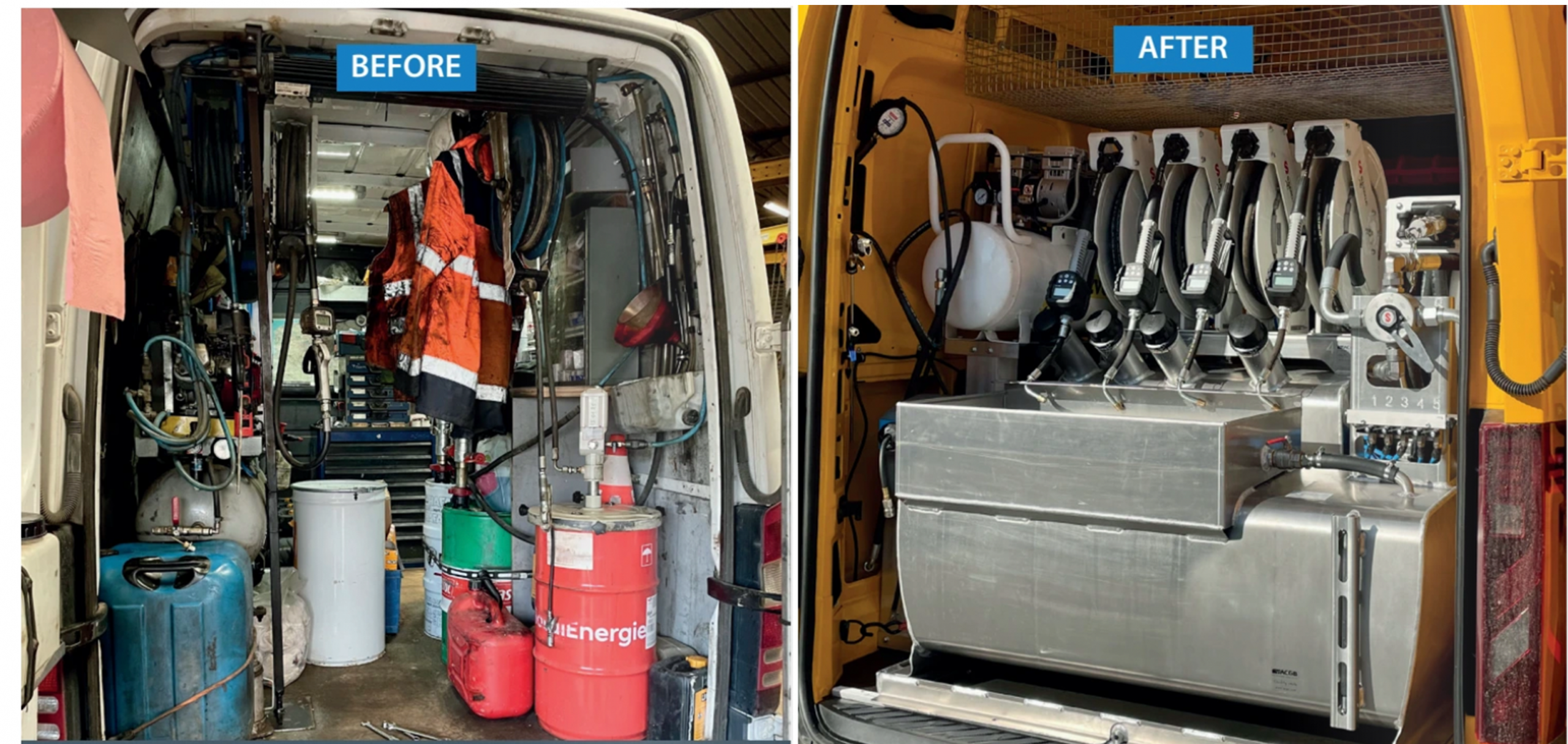
AFTER: A JCB service vehicle after the installation of an ACGB lube skid. The integrated compartments keep new and waste oils securely stored, with all pumps and accessories neatly in place, creating a safer, more organised and efficient workspace.
Containment as a Competitive Advantage
As regulatory frameworks tighten and fleet efficiency expectations grow, traditional fuel and oil handling methods are increasingly inadequate. Modern aluminium tank systems, like ACGB’s, provide a robust alternative aligned with today’s operational demands.
For fleet operators, the shift is no longer simply about transporting fuel and lubricants from one location to another. It is about adopting systems that improve safety, reduce operational risk and support more efficient day-to-day operations. By replacing improvised or legacy solutions with purpose-designed containment and transfer systems, fleets can improve productivity, strengthen compliance and protect both their people and their reputation.
For more information contact: Charles Macé e: c.mace@acgb.com or visit: www.acgb.com/en