
Lobbying government to change its plans for electric Vehicle Excise Duty (eVED) is among a range of new measures included in the latest version of the Association of Fleet Professionals’ (AFP) Manifesto.
This is the fourth edition of the document and the first to be issued since just before the most recent general election in July 2024. Its production was overseen by Dale Eynon, who was appointed as the AFP’s first government affairs and policy lead earlier this year.
He said: “The new version of the AFP Manifesto contains a comprehensive set of proposals designed to accelerate fleet decarbonisation, simplify fleet related taxation and regulation, improve national vehicle charging infrastructure, enhance fleet safety and mobility, and strengthen workforce capability.
“We are advocating for coordinated government action to support fleets through a complex and rapidly evolving technological landscape – and this document serves as a foundational ‘to do’ list for our lobbying strategy covering engagement with government departments, regulators, and industry partners.”
He said eVED was probably the single biggest policy development affecting AFP members since the last edition of the Manifesto, with a range of convincing practical and cost objections that needed to be considered within government thinking.
“Implementing eVED in April 2028 may adversely affect both new and used EV values, elevating operational expenses for businesses and potentially decelerating the UK’s momentum toward electrification at a critical juncture. Fleets are rightly concerned.
“However, we also recognise and welcome constructive action taken by the government in other areas and have added the recently launched Road Safety Strategy to the Manifesto. Feedback from AFP members indicates that its measures are viewed as prudent, well-constructed, and likely to yield positive results.”
Further issues highlighted in the document include more support for electric van adoption, help for the used electric vehicle (EV) market, parking costs being linked to shared mobility and public transport solutions, and updating of the “available to use” rule.
EV charging is especially given detailed attention, highlighting the need for a national kerbside charging strategy, better chargepoint regulation, investment in community charging projects, and removing VAT from home charger installation costs.
Also, the AFP reiterates its support and advocacy for the national development of a dedicated fleet apprenticeship, which represents the first initiative of its kind in the UK.
Paul Hollick, chair at the AFP, said: “The Manifesto represents our thinking on where we believe the government should be heading on a wide range of issues. It is designed to focus on practical points – ranging from small detail alterations to major strategic shifts – which will enable fleets to move forward with their plans faster and more effectively.”
Progress had been made in a number of areas since the previous editions were created, he added, reflecting AFP lobbying successes in its communications with government.
“Much has been achieved – for example, around 4.25 tonne electric vans and the need for long-term benefit in kind tables that provide fleets with future certainty – that show our lobbying activity is producing positive real-world effects for fleets.”
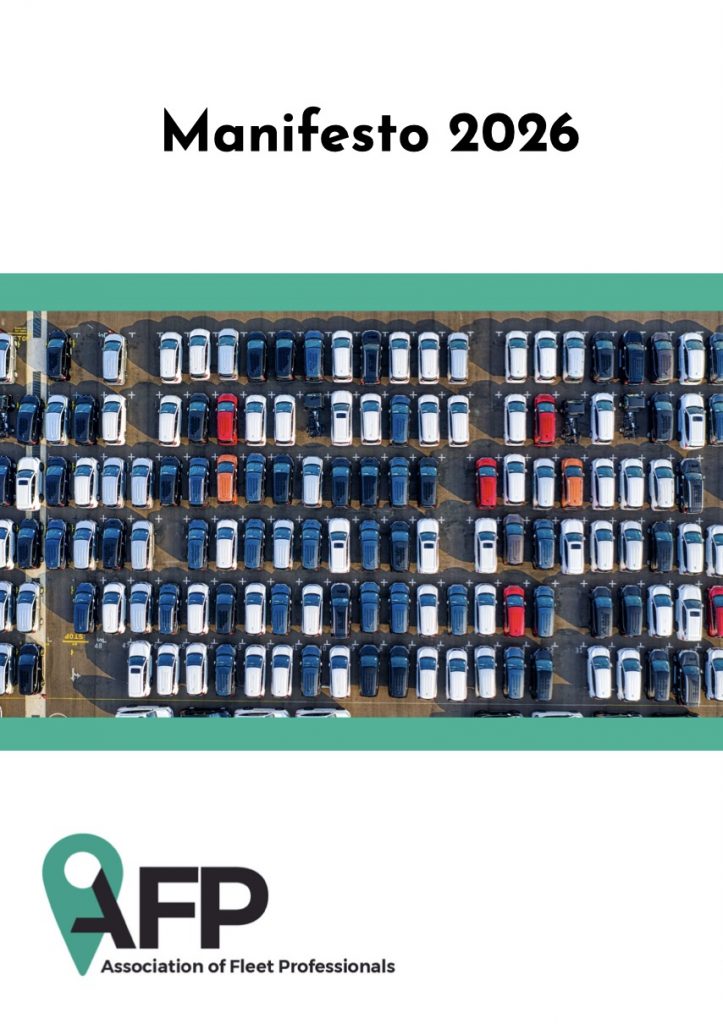
The AFP Manifesto can be downloaded at https://www.theafp.co.uk/wp-content/uploads/2026/06/AFP-manifesto-2026-ext.pdf.